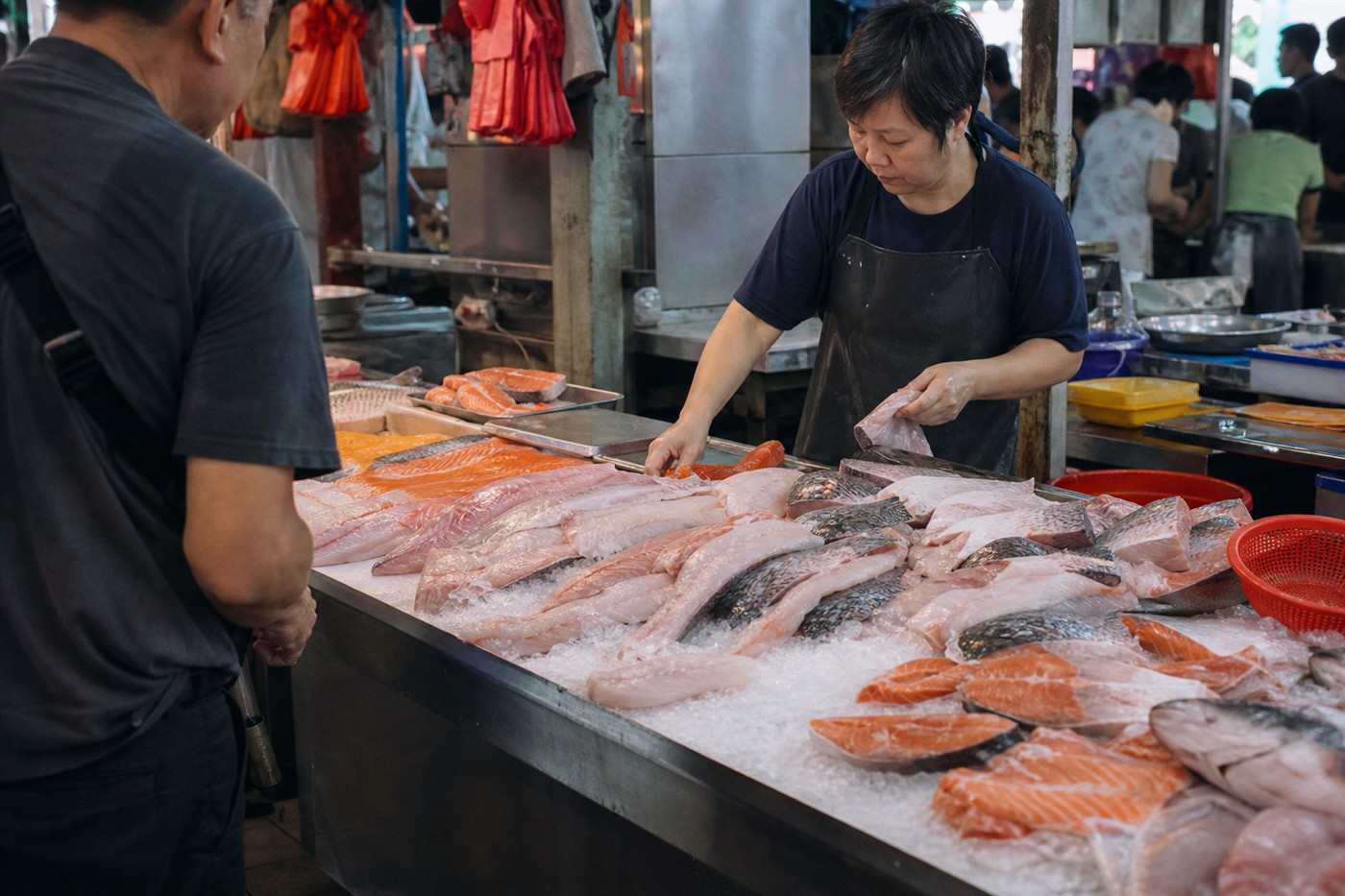
The auntie ahead of me wanted the larger fillet.
I had come to Kang Kar market in Sengkang on a Saturday because the fridge was empty and because market mornings have a texture supermarkets cannot copy — wet floor, shouted prices, the clatter of trays, aunties who assess your cooking intentions from the way you look at ginger. The fish stall is always my last stop. I tell myself vegetables first so I do not end up carrying fish through the whole market, though I often break this rule and smell faintly of the sea on the bus home anyway.
Two fillets remained on the ice — same price, different size. The auntie pointed at the big one. The uncle behind the counter wrapped it with practised speed, newspaper, plastic bag, a twist tie bitten off with his teeth. She left. I stood there with my basket of kangkong and two limau kasturi, looking at the smaller fillet as if it required a committee decision.
I live alone. A large fillet means leftovers or waste, and I hate waste more than I hate hunger. The smaller one was enough for one dinner and a little lunch if I was careful with the rice. I pointed. The uncle nodded without comment — the nod of someone who has watched ten thousand small domestic calculations play out across his ice bed.
While he wrapped it, I watched his hands. Quick, dry, respectful of the fish in the way people are respectful of things that feed them. The market around us was doing its mid-morning peak — a child refusing to pass the tofu stall, an uncle haggling over pomfret with affectionate aggression, the PA system announcing something about a wet floor in a voice that nobody listens to until someone slips.
Kang Kar is not the biggest market in the northeast, but it is mine by habit. I know which vegetable auntie will throw in extra chillies if you buy enough onion. I know the coffee stall closes early on Sundays. I know the fish uncle's queue is shortest before ten-thirty, which is why I was there, which is why I got the last small fillet instead of the last big one, which is why this paragraph exists.
On the bus back to Punggol I held the bag on my lap like a passenger. The ice had mostly melted. A woman beside me asked where I bought the fish because it looked fresh. I told her Kang Kar, stall near the pillar with the peeling paint. She wrote nothing down but nodded as if filing it mentally. Market intelligence travels this way — not online, not official, just auntie network and bus conversation.
At home I steamed the fillet with ginger and a splash of soy sauce. Ate at the counter. Washed the plate immediately because delayed washing is how flats start to smell like regret. The leftover half went into the fridge in a container with a lid that actually closes, which feels like adulthood when you are thirty-four and still occasionally surprised by it.
Sunday lunch was the same fish, flaked into rice with fried egg. Enough. Not generous, not stingy — the size of a quiet weekend when you do not have plans and the weather does whatever it wants outside your window.
Next Saturday I will probably go again. The auntie might want the big fillet again. I might take the small one again. The uncle will wrap it the same way. The market will smell like ice and salt. Some choices are only worth recording because they mark an ordinary life proceeding correctly — one fillet, one person, one evening meal settling into place at the table.
The container went into the sink after lunch. I stood at the window while the water ran hot. Blocks across the way were doing their Sunday slow glide. I had nowhere urgent to be. That was the whole point of the smaller fillet, though I did not know it when I pointed.