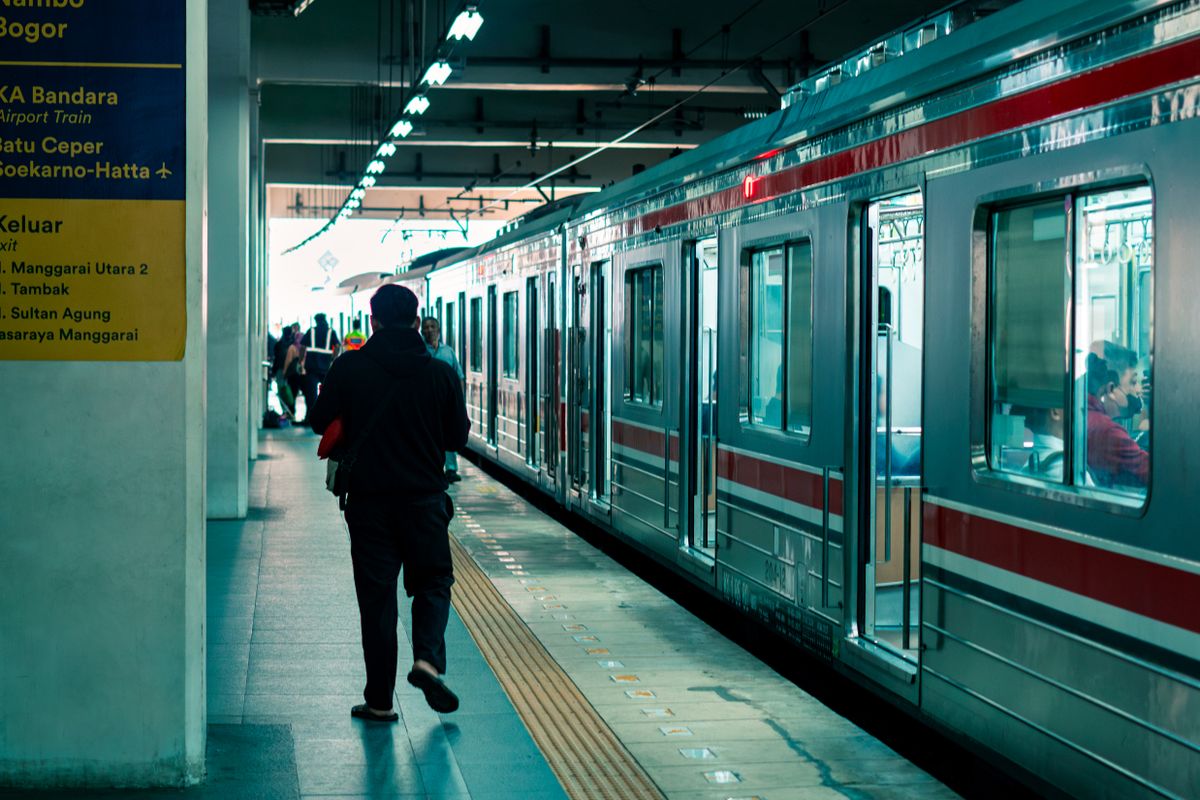
The train arrived before the father had folded the stroller.
I was transferring from the MRT, moving with the usual Punggol evening flow — tired, slightly hungry, phone in pocket, mind already on what was in the fridge. The LRT platform was full in the polite Singapore way: everyone knows their distance, nobody touches, eyes on screens or the track. Then the doors opened and the small drama began.
A man with a toddler in one arm was trying to guide a pram over the gap with his free hand. The wheel caught. Not dangerously — just enough that the pram tilted and the child in the seat made a small sound of protest. The father shifted his grip, lost half a second, and you could see the calculation on his face: let the train go, or rush and risk it.
Someone behind him — a woman in office badge and running shoes — put one hand on the pram handle without asking and one hand lightly on his elbow, steadying both. No speech. No performance. The pram eased across the gap as if the floor had levelled itself. The father stepped in. The woman stepped back. The doors closed. The train moved.
The whole thing took less time than it takes to describe. I was standing close enough to see it clearly and far enough that I was not part of it — the usual position of the observer who writes things down later. What struck me was not the kindness itself, which is common enough on good days, but the precision of it. She did not make him feel slow. She did not look around for approval. She touched the pram exactly where weight was needed and removed her hand exactly when it was not.
Punggol interchange at this hour is a machine for moving people — Punggol to Sengkang, Sengkang to the office line, children from tuition, aunties from market runs with trolley bags that take up moral space on the floor. We are all trying to fit. The gap between train and platform is a few centimetres on paper and a whole geography in practice if you are holding a child, or older, or simply tired enough that your feet misjudge distance.
I boarded the next car and stood by the window. The father was visible through the glass, settling the toddler, checking the pram brake with his foot. The woman who helped was two rows away, scrolling her phone as if nothing had happened. I wanted to note her face and decided not to — this site does not name strangers, and the moment was not mine to claim.
At Punggol station I got off and walked home along the covered linkway. The estate was doing its evening descent: food smells from the hawker, children in tuition uniforms, the LRT above humming like a constant low note. I thought about how many times I have been the person who needed a steady hand and how many times I have been the person who looked away because hurry felt more important.
Tomorrow the interchange will be the same geometry — same gap, same doors, same crowd calculating whether to squeeze. I will probably forget this particular pram. But for now I remember the hand on the handle, the absence of words, the way the platform seemed to settle after the train left, as if everyone had exhaled together without knowing it.
I wrote it down on the lift up. Not for a lesson. Because some evenings need a single good detail to land cleanly, and this was mine.