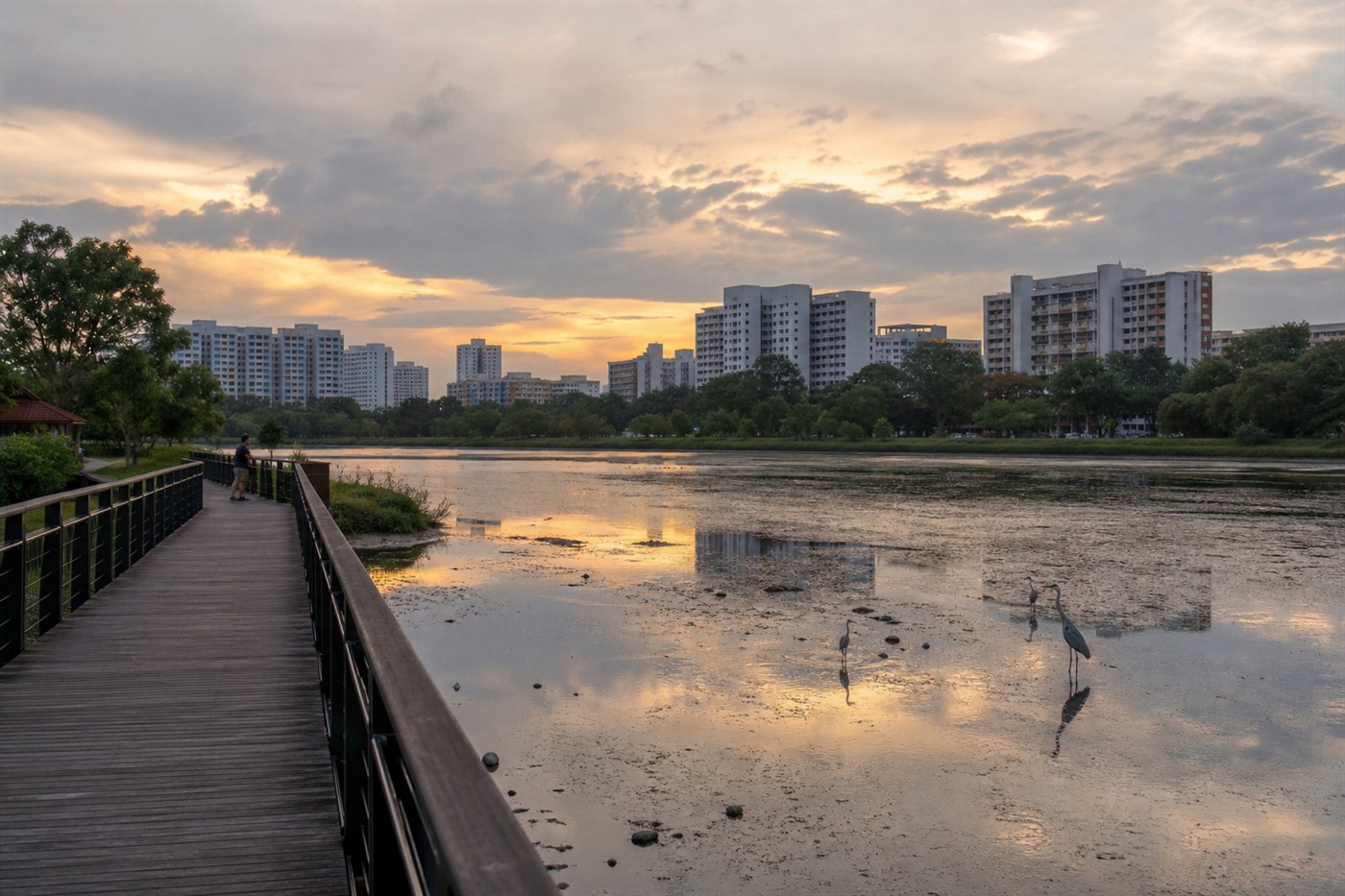
I missed my bus on purpose.
Not dramatically — I saw it at the stop, checked the time, and let it leave without breaking into a jog. The next one was twelve minutes away. Twelve minutes is enough to stand by the railing and watch the waterway do what it does when office hours release their hold on everyone: reflect the blocks, swallow the sky, pretend for a moment that the estate was built around the river instead of the other way around.
I walked the park connector toward Coney Island instead of waiting on the plastic bench. This is the long way home to Blk 168 — an extra forty minutes if I do not stop, an hour if I do. My legs knew the route before my head agreed. Punggol residents treat the waterway like a shared corridor: joggers with earnest faces, couples on bicycles wobbling politely, an uncle fishing where the sign says not to, everyone pretending not to notice the uncle because he keeps to himself and the fish are small anyway.
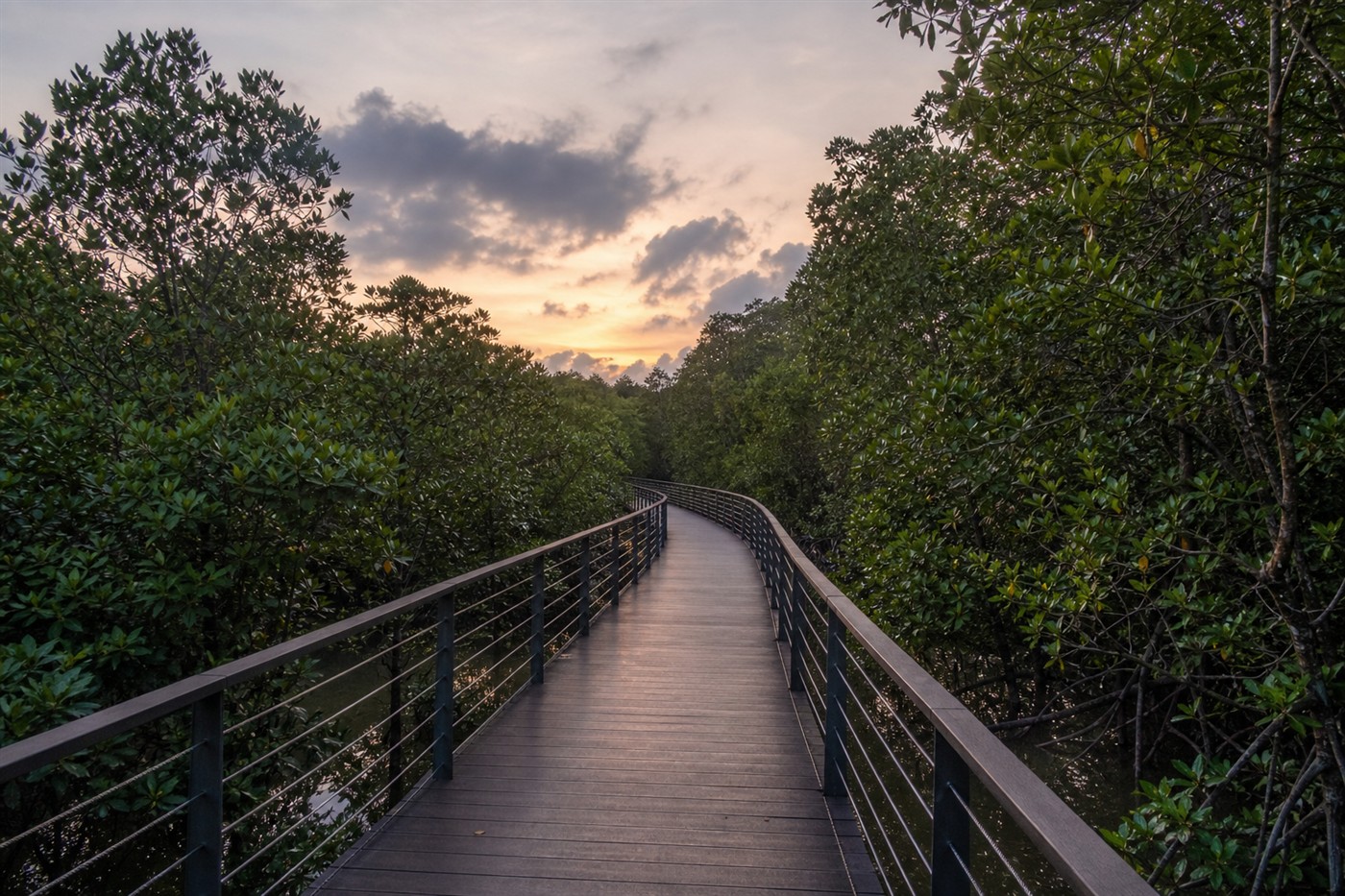
Two herons stood in the shallows with the stillness of furniture. I have never seen one hurry. They watch the water, strike once, miss or succeed, return to the same posture as if nothing had happened. I stood on the boardwalk longer than I needed to, which is the pattern of this walk — stopping for scenes that would not photograph well but stay anyway.
The horizon line over the flats was a band of amber so thin it looked drawn by hand. Blocks on the far side had begun their evening sequence: corridor lights, kitchen windows, the blue flicker of a screen in a bedroom. From the boardwalk they looked like a circuit board coming online one row at a time. I thought about how many people were opening their doors at the same moment, setting bags down, calling out that they were home — the small touchdown repeated across thousands of units.
Coney Island entrance is quieter than the Punggol side. Fewer joggers venture past the bridge when dinner calls. I did not enter the island proper — the light was already dropping anchor and I had no torch — but I walked to the gate and back, which adds nothing to the step count and everything to the feeling of having gone somewhere.
On the return leg a child on a scooter passed me twice, looping between parents who walked at adult speed. A woman talked on her phone about laundry. A man fed bread to the ducks despite every sign. The waterway accepted all of it without comment.
By the time I reached my block the bus I had missed was long gone and forgotten. The lift was slow, which gave me time to notice the corridor window on the fourteenth floor — the one that always catches the last horizontal light. Orange for about four minutes, then grey, then the fluorescent corridor hum takes over.
I keyed in, boiled water, stood at my own window while the kettle worked. The waterway was a dark line between blocks. Somewhere out there the herons were still standing or had flown to wherever herons go when the boardwalk empties. I will take the long way again when the next twelve-minute gap appears. The bus can wait. The waterway cannot — it moves whether I watch or not, but I prefer to watch.